
Operations
Documentation standard for small MSP teams
A practical documentation standard for small MSPs that need client records technicians can trust during support, onboarding, monthly review, vendor work, and offboarding.
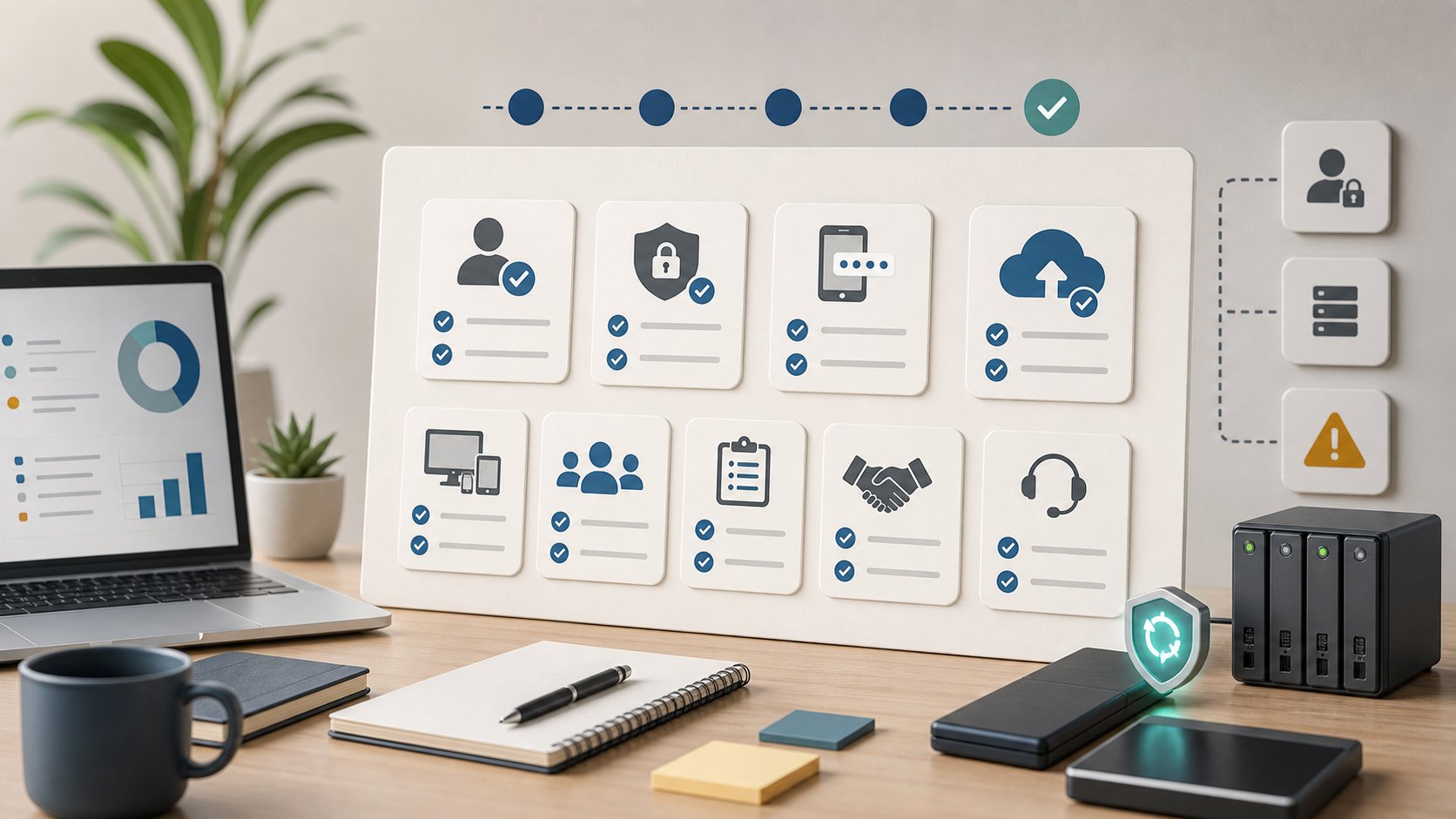
Short answer: Small MSP documentation should help a technician take the next safe action without asking the owner to remember the client. If the record cannot answer support, access, backup, vendor, and exception questions, it is not operational yet.
Documentation is operational memory
Small MSP documentation does not need to look like an enterprise CMDB. It needs to survive absence, urgency, rotation, and the moment when the owner is not available to answer a chat message.
Use public frameworks as guardrails, not as paperwork. NIST SP 800-128 supports treating documentation as part of operational change control, not as cleanup after the real work. If a ticket changes access, monitoring, backup scope, or system state, the client record should change in the same workflow.
The client onboarding checklist is where most records begin. The monthly review checklist is where they stay honest.
Minimum record set
For each managed client, keep a practical record of:
- primary contacts, approvers, and billing contacts;
- sites, users, endpoints, servers, and core cloud services;
- admin access model and break-glass ownership;
- RMM, PSA, documentation, backup, EDR, identity, DNS, and firewall ownership;
- vendor contacts and renewal dates;
- backup scope, alert owner, retention, and restore path;
- recurring tasks and monthly evidence;
- accepted risks and open exceptions;
- out-of-scope systems.
The CIS Controls Navigator is a useful external reference for inventories of accounts, service providers, assets, and access systems with named owners and review dates. That fits the operating point here: documentation should show who owns admin access, which vendor owns what, and when the record must be validated again.
Do not hide critical facts in ticket history only.
Update when work changes the environment
Documentation fails when it is treated as a separate project after the real work. Update the record when a ticket changes access, backup scope, vendor ownership, monitoring, licensing, network state, or client expectation.
The CISA Cybersecurity Performance Goals checklist is useful as a reality check because many baseline goals depend on current records: identity, assets, backups, logging, vulnerability handling, and response contacts. If the documentation is stale, the control story is probably stale too.
The service desk model should make this visible in closure evidence.
Assign owners, not just fields
Every record area needs an owner:
- who can update it;
- who reviews it;
- what evidence proves it is current;
- when it becomes stale;
- what ticket or review triggers cleanup.
Ownership does not mean one person writes everything. It means nobody assumes the note is someone else's problem.
Keep vendor and tool records usable
The tool stack selection framework should influence documentation. If a tool cannot export useful records, show audit history, or identify who changed access, the MSP inherits operational risk.
For cloud identity, keep a documented break-glass path separate from day-to-day admin access and test it on a schedule. Microsoft's emergency access account guidance is product-specific, but the operating principle is vendor-neutral: emergency admin access needs clear ownership, secure storage, and periodic validation.
Document enough vendor detail for a technician to open a case without searching email for an hour.
Common mistake
The common mistake is documenting for appearance: lots of sections, old screenshots, unclear owners, and passwords without context. That creates the feeling of maturity without giving the queue useful memory.
When to change level
Change documentation level when new technicians cannot resolve common tickets, monthly review finds stale records, offboarding becomes detective work, or vendor coordination depends on one person's inbox.
FAQ
What documentation does a small MSP need at minimum?
At minimum, document contacts, sites, supported systems, admin access, vendors, backups, network basics, recurring tasks, exceptions, and the current owner for each area.
Who owns documentation in a small MSP?
The ticket owner should update the specific record when work changes the environment. One person can own review rhythm, but documentation cannot live only with that person.
How often should documentation be reviewed?
Review critical client records during onboarding, after material changes, during monthly review, and before renewal or offboarding.
What is documentation theater?
Documentation theater is a large system full of stale notes that technicians do not trust during urgent work.
Related guides
Client onboarding checklist for small MSPs
Turn a new client from unknown environment into documented, monitored, supported account with clear decisions and exceptions.
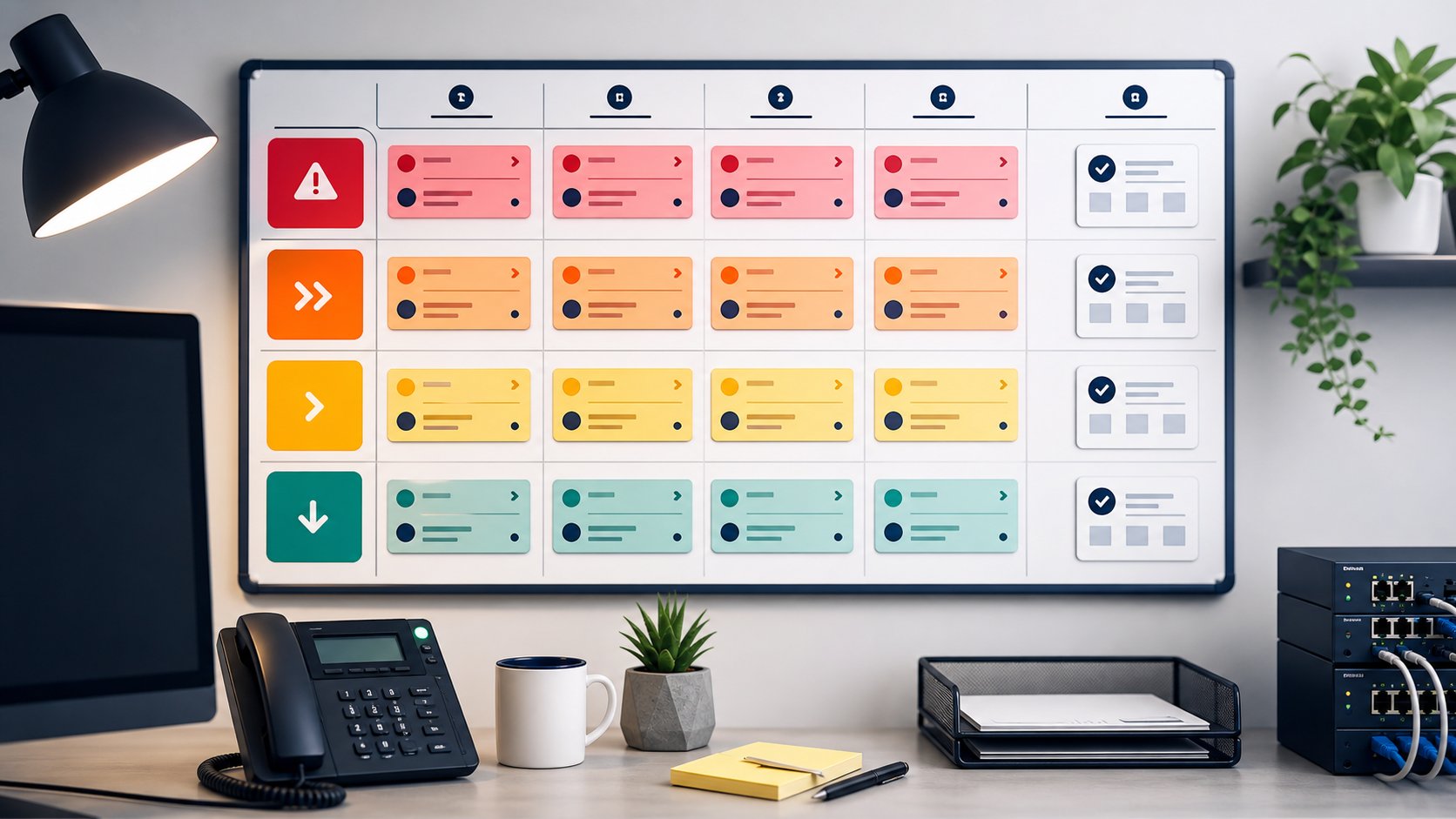
Small MSP service desk model
Define intake, priority, next action, escalation, waiting states, closure evidence, and review rhythm before the queue becomes noise.

MSP monthly review checklist for small teams
Run a useful monthly review without turning it into QBR theater: evidence, exceptions, queue patterns, backup proof, and scope decisions.
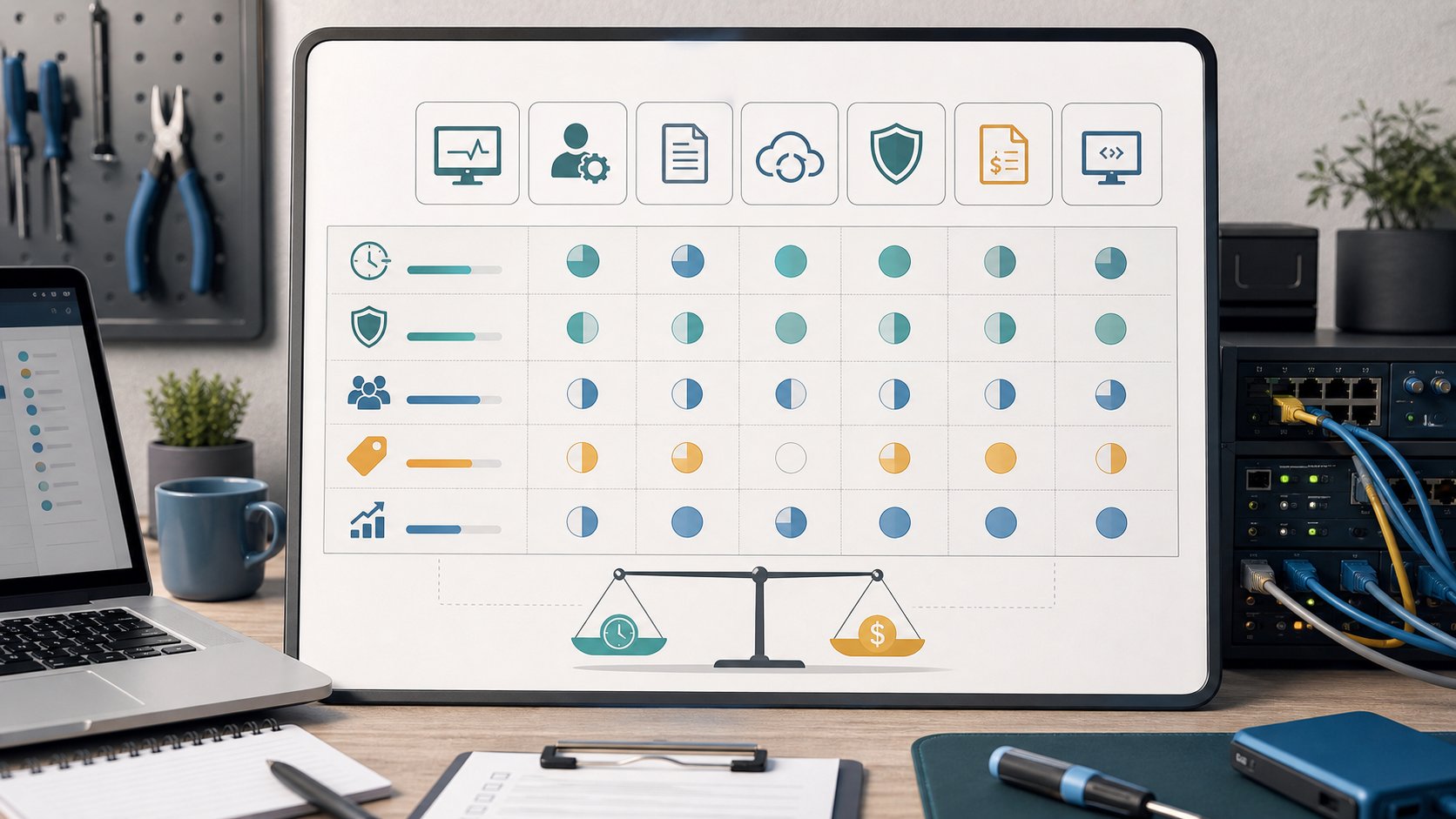
Tool stack selection framework for small MSPs
Choose tools by weekly operating load, alert quality, evidence, contract fit, and exit path, not by the loudest demo.