
Start Here
What is a small MSP?
A practical definition of a small managed service provider, how it operates, where managed service differs from break/fix, and which promises it can safely make.
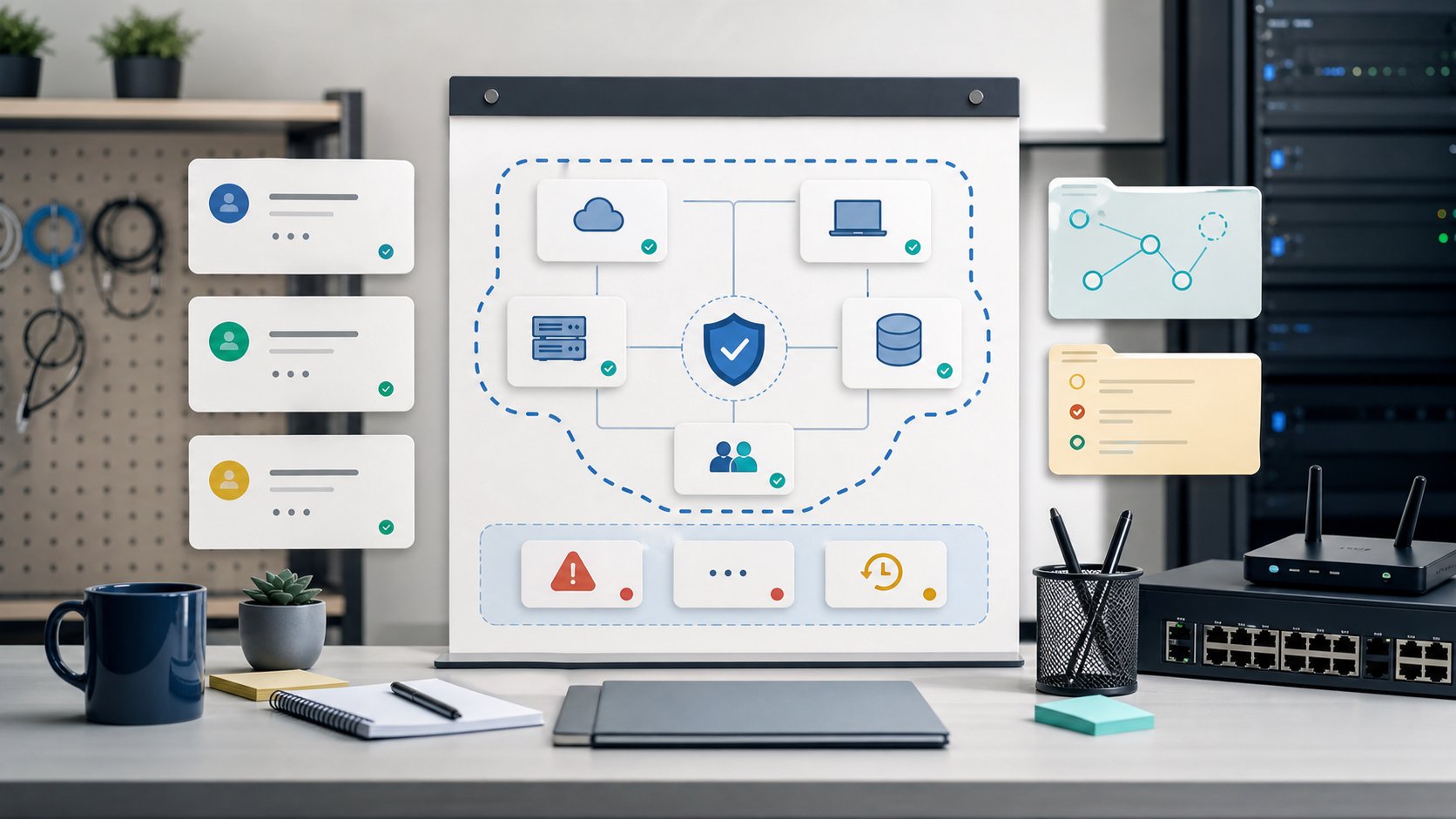
Short answer: A small MSP is a managed service provider whose operating limits are still shaped by small-team capacity: owner judgment, technician time, documentation discipline, tool contracts, and the need to prove recurring work every month.
Start with the promise, not the label
A small MSP is not just a small IT company with recurring invoices. It is a business that accepts ongoing responsibility for defined parts of a client's technology environment.
That difference matters. Break/fix work starts when something breaks. Managed service work starts before that, when you define what you watch, what you support, what you will not touch, and how the client will know the work happened.
For a small MSP, the hard part is not sounding mature. The hard part is making promises that a small team can actually keep.
Small is an operating condition
The SBA table of size standards shows that "small business" can be a formal classification based on industry, revenue, or employee count. That is useful for legal, lending, and procurement contexts, but it is not enough to define a small MSP operationally.
On SmallMSP, "small MSP" means the business is still close enough to the work that capacity, documentation, tooling, support flow, pricing, and owner judgment are visible constraints.
A small MSP may have one person, a few technicians, or a small team with help desk, projects, and admin work split informally. The exact headcount matters less than the operating reality:
- The owner may still handle escalations, sales, billing, and vendor decisions.
- One overloaded technician can become the bottleneck for many clients.
- A bad tool contract can hurt cash flow.
- A vague support promise can turn into unlimited unpaid labor.
- Documentation gaps become late-night guessing.
- Security language can become broader than the team can verify.
- Client communication often depends on a few people, not a formal account team.
Small does not mean unserious. It means the operating margin is tighter and every vague commitment shows up quickly.

The managed service line
Before calling an offer "managed services," draw the operating line.
Define:
- Which users, devices, sites, servers, cloud tenants, and applications are covered.
- Which support channels count.
- Which hours and emergency rules apply.
- Which security baseline is included.
- Which backup and restore checks are included.
- Which vendor coordination is included.
- Which work becomes a project.
- Which work becomes incident response.
- Which risks remain the client's decision.
- Which proof the MSP will show each month.
If this line is not written down, the client will write it for you during an outage, renewal, or billing dispute.
This is why the first operational asset should be the client onboarding checklist. Onboarding turns an unknown environment into known contacts, assets, access, vendors, backups, exceptions, and client decisions.
What a small MSP actually manages
Most small MSPs manage a mix of these areas:
- Endpoints, servers, and remote access.
- Cloud identity, email, and user lifecycle.
- Ticket intake and support communication.
- Patch workflow and endpoint visibility.
- Backup monitoring and restore evidence.
- Documentation and vendor contacts.
- Security controls that are explicitly included.
- Client risk decisions and exceptions.
- Tool stack, contracts, billing, and reporting.
The NIST Cybersecurity Framework 2.0 is helpful because it separates the work into govern, identify, protect, detect, respond, and recover. A small MSP does not need to present itself like an enterprise security department. It does need to know which of those functions it owns, which it supports, and which remain outside the monthly agreement.
Dangerous promises
The most dangerous small-MSP promises sound harmless when the deal is new:
- "We support everything that touches the internet."
- "Just message me after hours if anything breaks."
- "Backups are included" without defining restore testing.
- "We handle vendor problems" without pricing coordination time.
- "Security is included" without naming controls, evidence, or incident boundaries.
- "Unlimited support" without intake, priority, exclusions, or fair-use language.
These promises feel flexible. They are really open loops. They let the client assume coverage that the MSP may not have priced, staffed, or documented.
The CISA cyber guidance for small businesses frames cybersecurity as practical work tied to roles and action paths. The FTC cybersecurity guidance for small businesses points to basics such as access, data, backups, and response preparation. For an MSP, those basics are not slogans. They become recurring work only when someone owns them, checks them, and can show evidence.
Signs you are still break/fix with a monthly invoice
Recurring billing does not automatically make the service managed.
Watch for these signs:
- Work starts only when the client complains.
- Assets are unknown or stale.
- Backups are assumed but not verified.
- Restore has never been tested.
- Tickets live in email, chat, text messages, and memory.
- The owner is the only person who knows client exceptions.
- Security alerts do not have a defined owner.
- Vendor cases disappear into private inboxes.
- Pricing does not change when scope grows.
- Monthly review requires a scramble every time.
If those are true, the MSP may still be operating as break/fix with recurring invoices. The fix is not shame. The fix is to define the operating model.
The five operating systems of a small MSP
A small MSP usually succeeds or fails around five operating systems.
Onboarding
Onboarding is the intake of risk, not just a welcome email. It should identify assets, admin access, DNS, backup ownership, vendors, emergency contacts, unsupported systems, and exceptions. Without that intake, every later process starts with blind spots.
Service desk
The small MSP service desk model should make work visible: intake, priority, owner, next action, waiting state, escalation, closure evidence, and review rhythm. If support lives in chat and memory, the MSP is carrying hidden risk.
Security baseline
The security baseline for small MSPs should define the controls the MSP can actually verify: MFA, admin accounts, endpoint alerts, patch exceptions, backups, restore checks, offboarding, and open client decisions.
Small-business security guidance is useful only when it becomes an operating habit. If a control is sold as recurring service, the MSP needs a ticket pattern, evidence path, review rhythm, and pricing boundary for it.
Tool stack
The tool stack selection framework should help the MSP choose tools by workflow, risk, alert quality, integration minimums, vendor terms, margin, contract fit, and exit path. Tools should carry the operating model, not define it.
Pricing
The managed services pricing guide should connect the promise to labor, tooling, security review, service desk load, vendor coordination, incidents, project work, onsite work, vCIO expectations, and margin. If the price cannot fund the promise, the contract is not affordable for the MSP either.
Monthly proof
Managed service needs proof. That proof does not have to be a polished enterprise report. It does need to show that the recurring promise is alive.
Use the MSP monthly review checklist to turn the operating model into evidence:
- Client health.
- Ticket patterns.
- Backup and restore confidence.
- Security and identity exceptions.
- Vendor or tool drift.
- Scope decisions.
- Pricing flags.
- Work to change before next month.
If the monthly review cannot find evidence, the MSP may be selling intention instead of service.
What makes the business small
Small MSPs feel pressure faster because there is less slack.
- A senior technician out sick can change response quality immediately.
- A client with one noisy environment can consume the week.
- A vendor outage can create multiple client conversations at once.
- A weak PSA workflow can hide unpaid work.
- A tool minimum can consume cash before the client base is ready.
- A security incident can stop normal service desk work.
- An owner who keeps every decision in their head becomes the growth ceiling.
That is why small MSPs need less theater and more control: clear scope, known assets, sane ticket flow, access hygiene, backup visibility, clean vendor boundaries, and pricing that protects time.
SmallMSP rule of thumb
If you cannot explain the service on one page, your team probably cannot deliver it consistently.
That one page should be blunt:
- We support these things.
- We do not support these things under the monthly plan.
- These risks are watched.
- These risks remain the client's decision.
- This is how requests enter the queue.
- This is how work is prioritized and closed.
- This is what evidence the client receives.
- This is what becomes project, incident, or separate approval.
The point is not to look smaller. The point is to make the service operable.
Common mistake
Many new MSPs buy tools first because tools feel like progress. But tools do not fix an undefined business model. They just automate the confusion.
Define the promise first. Then pick the stack that helps you keep it.
When a small MSP changes level
A small MSP starts becoming a different kind of company when the owner is no longer the default escalation path, documentation is good enough for another technician to act, client reviews happen without heroic preparation, security work has evidence, pricing funds the service load, and the service desk can run without private memory.
That does not mean the MSP must chase size. It means the business has moved from owner-held operations to system-held operations.
Growth is useful only when the operating model gets clearer, not when it hides more promises inside the same small team.
FAQ
What makes a small MSP different from break/fix?
A small MSP owns a defined recurring service. Break/fix starts when something fails. Managed service starts when scope, queue, ownership, and monthly proof are already defined.
Can a solo operator be a real MSP?
Yes, if the service boundary is written, requests enter a real queue, access is controlled, and the client receives recurring proof.
How small is small in MSP terms?
It is less about headcount and more about visible capacity. If owner judgment, technician time, documentation gaps, and tool contracts are still daily constraints, the business is operating as a small MSP.
What should a small MSP define before selling managed services?
Covered users and systems, support hours and channels, security baseline, backup and restore expectations, project boundaries, incident boundaries, and monthly proof.
Related guides
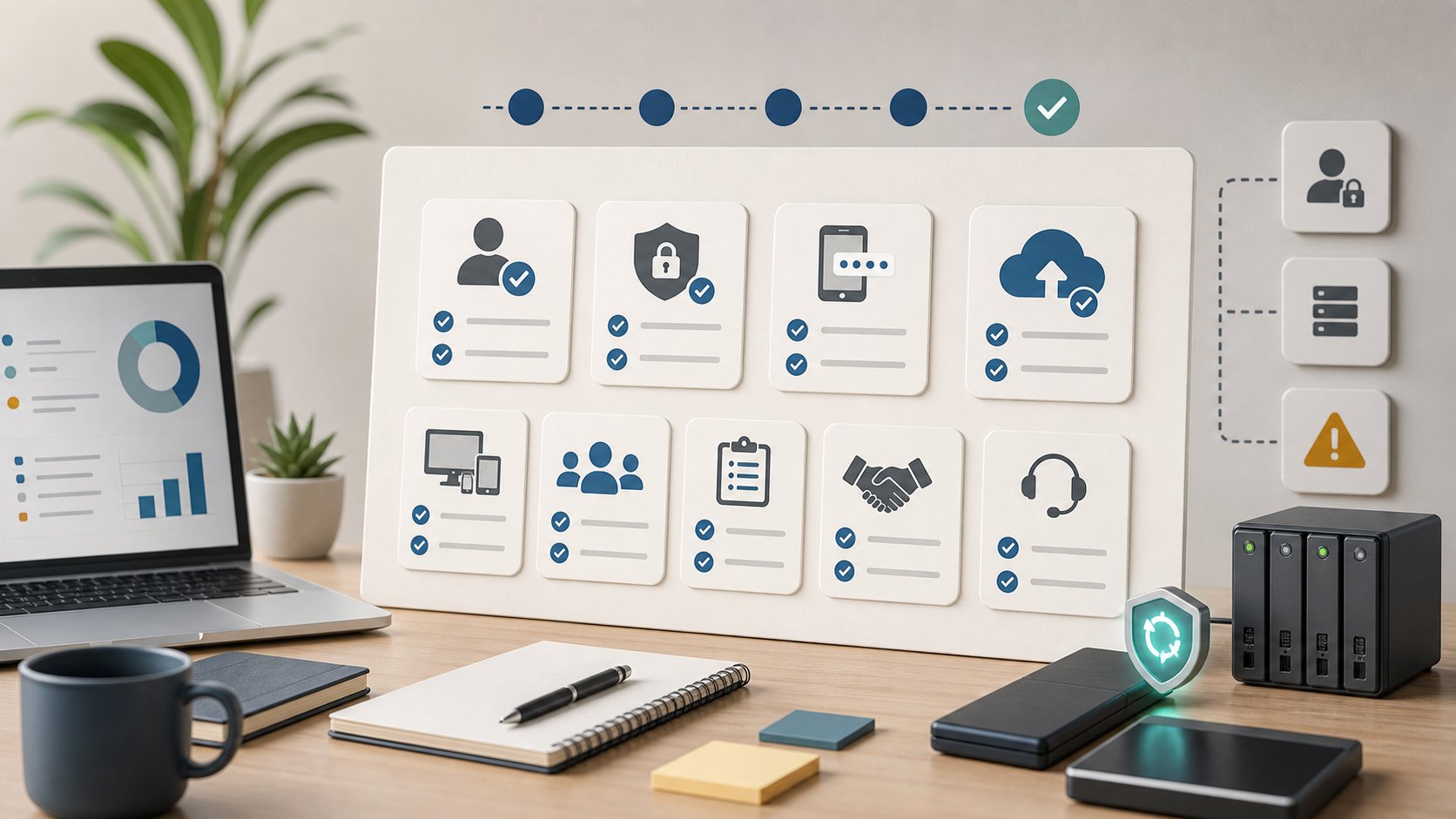
Client onboarding checklist for small MSPs
Turn a new client from unknown environment into documented, monitored, supported account with clear decisions and exceptions.
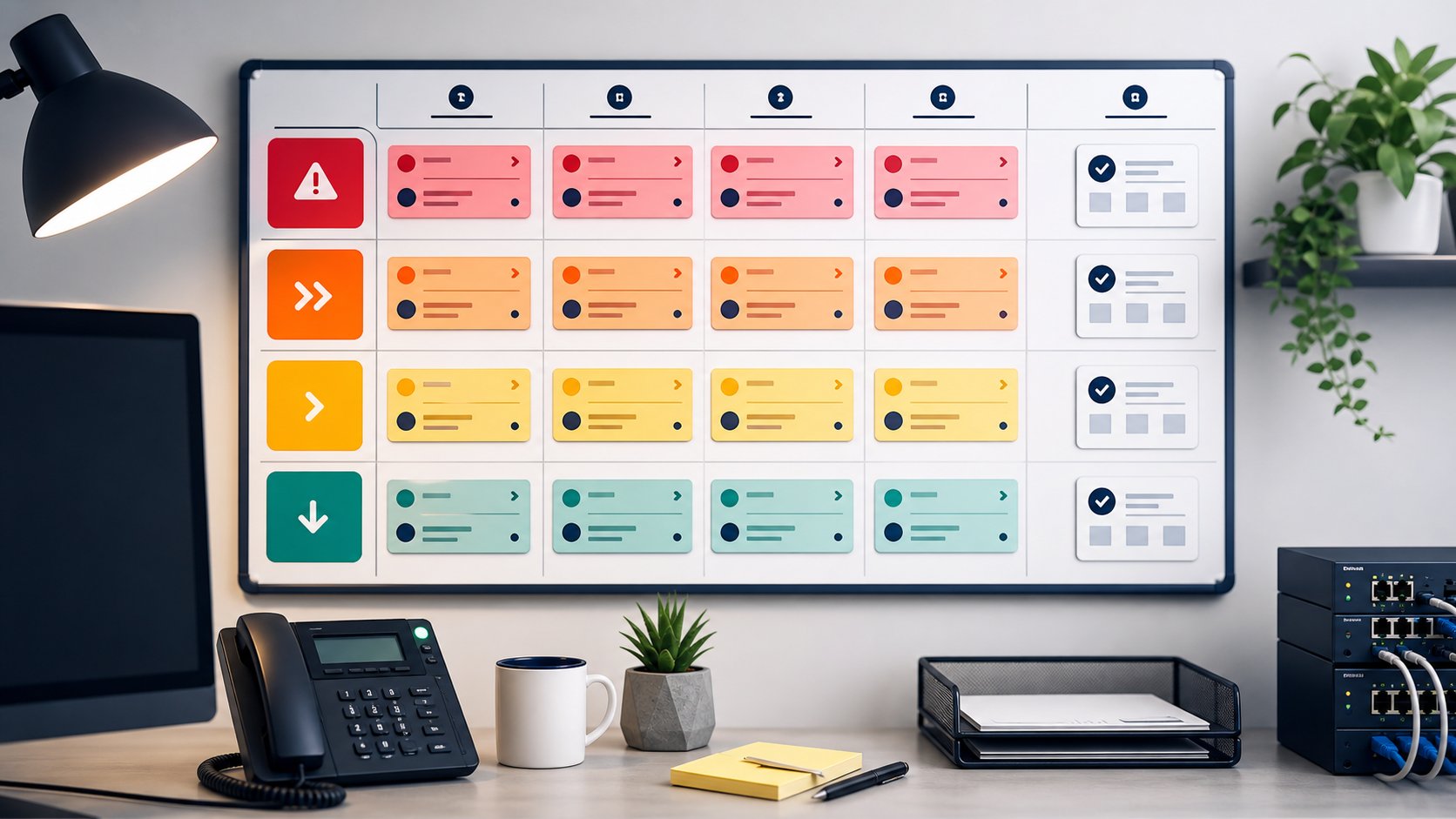
Small MSP service desk model
Define intake, priority, next action, escalation, waiting states, closure evidence, and review rhythm before the queue becomes noise.

Pricing managed services without undercharging
Build a minimum viable price around responsibility, labor, tools, review work, risk buffer, discount boundaries, and the technician time your team must protect.

MSP monthly review checklist for small teams
Run a useful monthly review without turning it into QBR theater: evidence, exceptions, queue patterns, backup proof, and scope decisions.